Nobody has ever shown up to a headshot session feeling completely sure about what they're wearing. It's the question I get more than any other, usually the night before, usually by text.
Here's the short version: solid colours, real sleeves, and something you already own. The rest is detail.
Start with the background
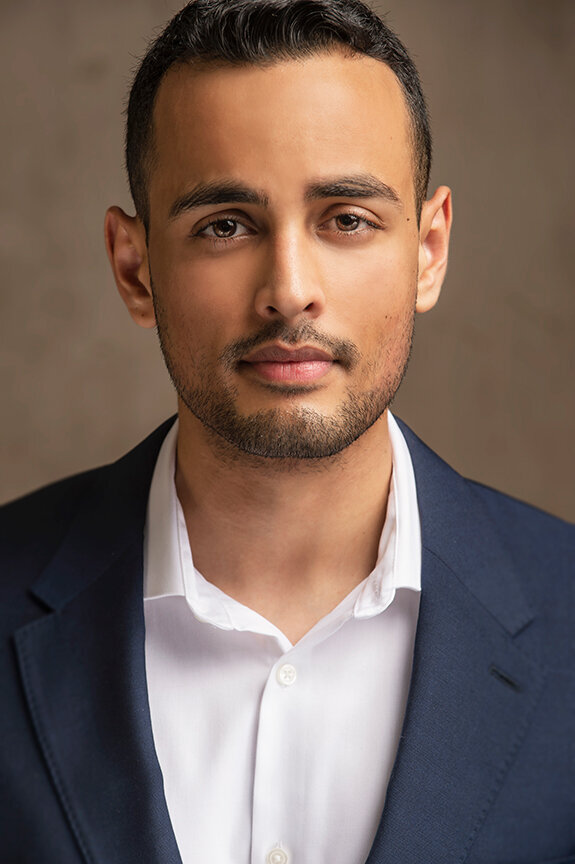
Most of my sessions are shot on-site with a clean neutral or a soft grey backdrop. That means mid-tone colours separate best — navy, charcoal, forest, burgundy, deep teal.
Pure white tends to blow out under studio light and pull the eye away from your face. Pure black can swallow shoulders entirely, so your head appears to float. Neither is fatal, but if you have a choice, go one step off the extreme.
Sleeves matter more than people expect
Short sleeves and sleeveless tops read as casual in a corporate context, and bare arms take up a surprising amount of frame in a headshot crop. A jacket, blazer, cardigan, or long-sleeved top gives the photo structure and makes the picture about your face.
This is the single change that most often turns an okay headshot into a good one.
Patterns: keep them large or skip them
Fine checks, thin stripes, and small herringbone can produce a shimmering moiré effect on camera. It's a sensor artefact, not something retouching fixes cleanly.
Large, low-contrast patterns are fine. If you're unsure, solid wins.
Glasses
Wear them if you wear them daily — your headshot should look like you walking into a meeting. Two things help:
- If you can get anti-reflective lenses, they make a visible difference.
- If you have photochromic lenses that darken outdoors, mention it. We'll shoot away from windows so they stay clear.
I light to minimise reflections either way, but knowing in advance saves time.
A few small things that show up on camera
- Press it. Wrinkles are far more visible in a still photograph than in a mirror.
- Check the collar. A curling collar point is the most common retouch request I get, and it's avoidable.
- Lint roll dark colours. Especially navy and black.
- Skip anything loud around the neck. Big necklaces and bold ties pull attention downward.
Bring a second option
If you can, bring one alternative. It costs nothing, takes two minutes to change, and gives you a choice when you see the images. People often surprise themselves — the shirt they were unsure about frequently wins.
For teams: give people guidance, not a uniform
If you're organising headshots for a group, send your team two or three sentences ahead of time. Something like: solid colours, sleeves, avoid tiny patterns, bring a backup if you like.
That's enough to make a set of headshots look cohesive without anyone feeling like they were told what to wear. A mandated dress code tends to produce stiff photos; light guidance produces a consistent set of people who look like themselves.
If you want the practical side of running a session for a group, I wrote about that in how to plan team headshots for your office.
The thing that actually matters
Clothing is the easiest variable to control, which is why everyone focuses on it. But the photographs people end up using are almost never the ones with the best outfit — they're the ones where the person looks like themselves and isn't bracing for the shutter.
That part is my job. Wear something you're comfortable in, and let me handle the rest.
Booking headshots in Dallas–Fort Worth? See flat session pricing or how team sessions work.